iHARP banner featuring large white and blue icebergs floating in calm blue water under a bright sky.

Institute for Harnessing Data and Model Revolution in the Polar Regions (iHARP)

iHARP Logo

About

iHARP unites over 80 experts and collaborators across 12 institutions to harness data and models in the polar regions, focusing on the future mass balance of Greenland and Antarctica and its impact on sea-level rise and global communities. By bridging academia, government, industry, and local stakeholders, iHARP fosters a collaborative environment where diverse perspectives and deep domain expertise converge. Through a deliberate multi-disciplinary approach—pairing data scientists with polar researchers on every project—iHARP moves beyond traditional climate modeling. The institute develops novel AI-driven methodologies that remain grounded in the physical sciences through Physics-Informed Machine Learning. Read the entire award abstract here.
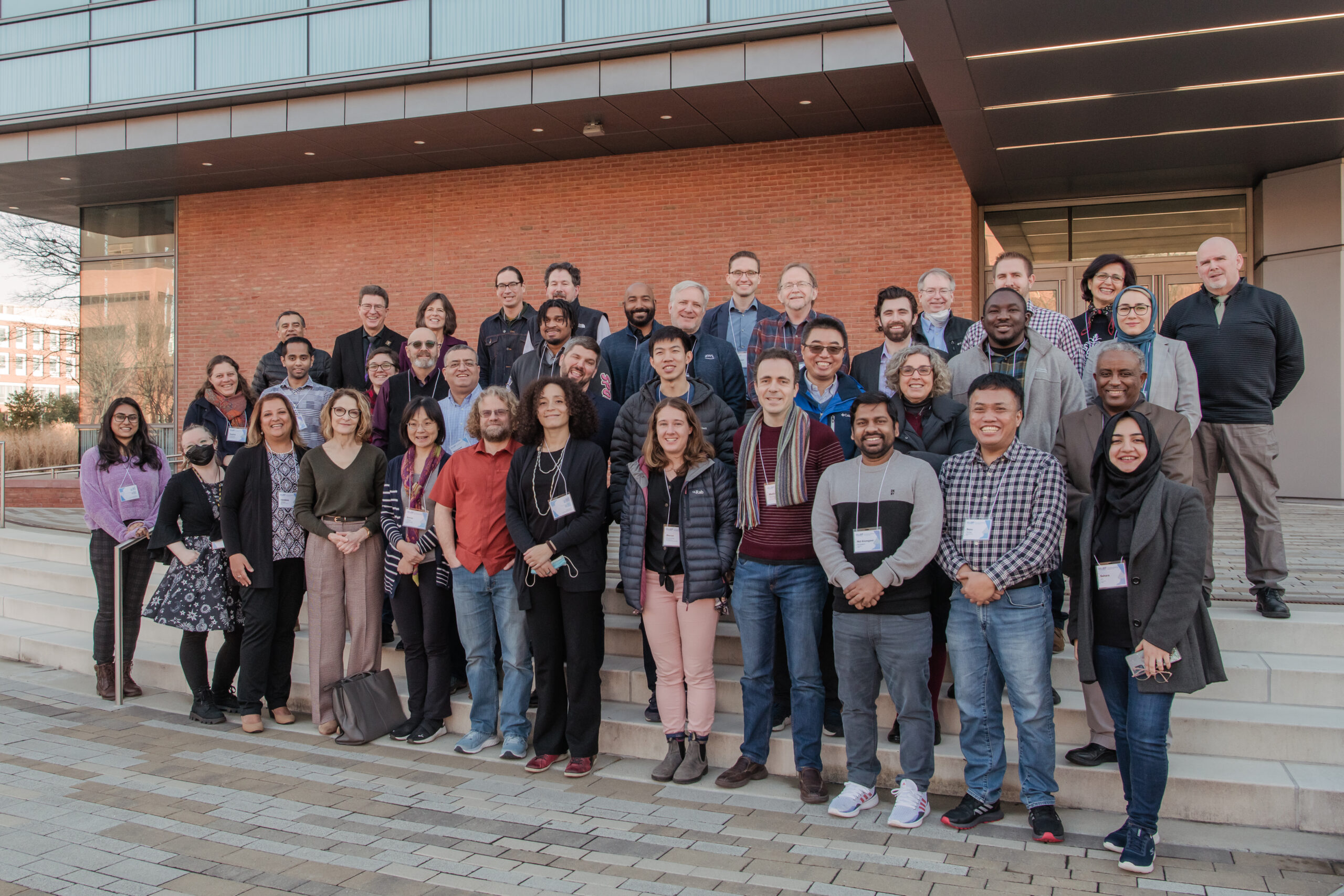

Group photo of iHARP team of about thirty people, outside in front of a brick building, standing on wide stone steps.
A presenter stands at a podium on a large stage in a darkened auditorium. Behind them, a massive screen displays a slide presentation.
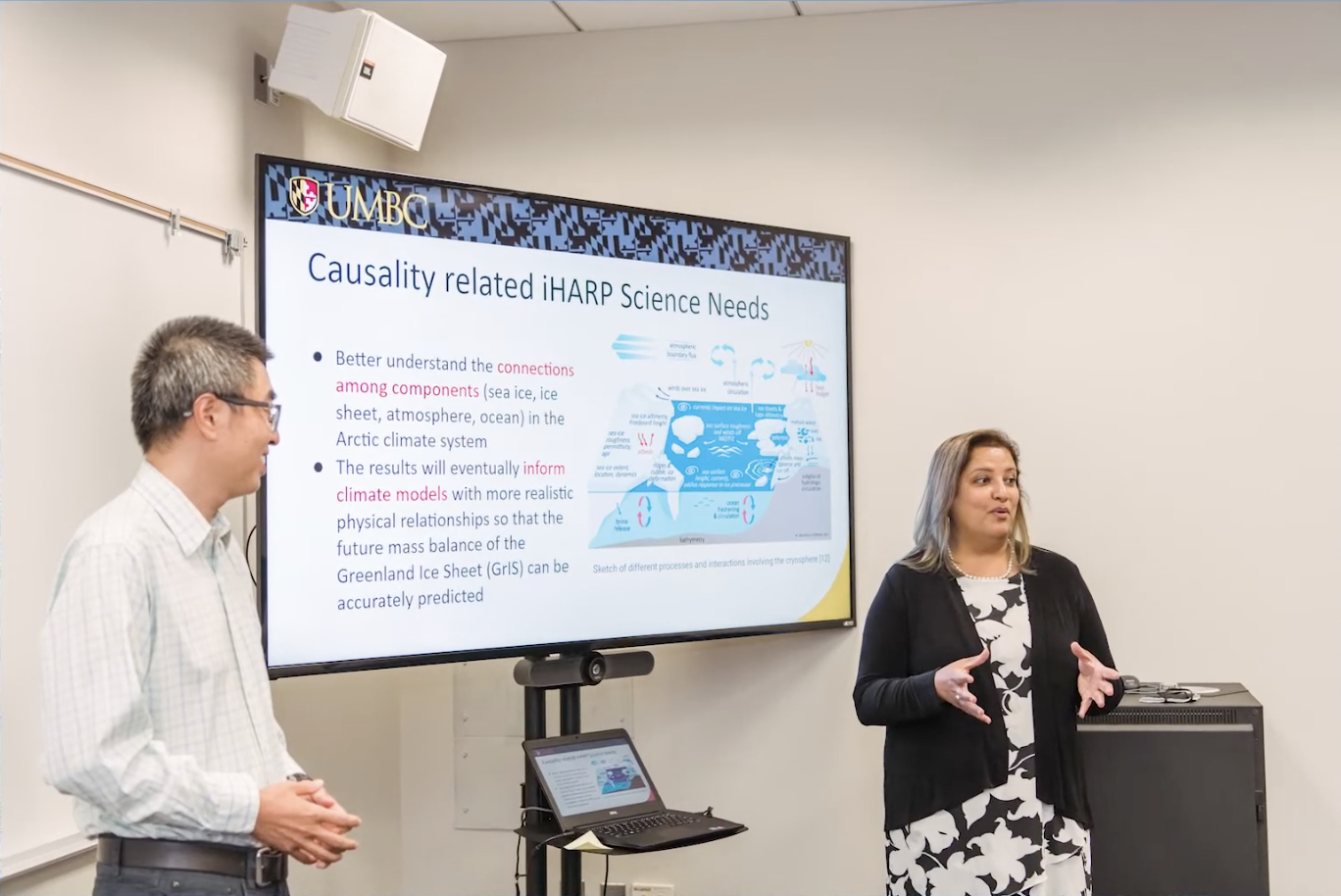
A man and a woman giving a presentation, with a slide titled “Causality related iHARP Science Needs”.
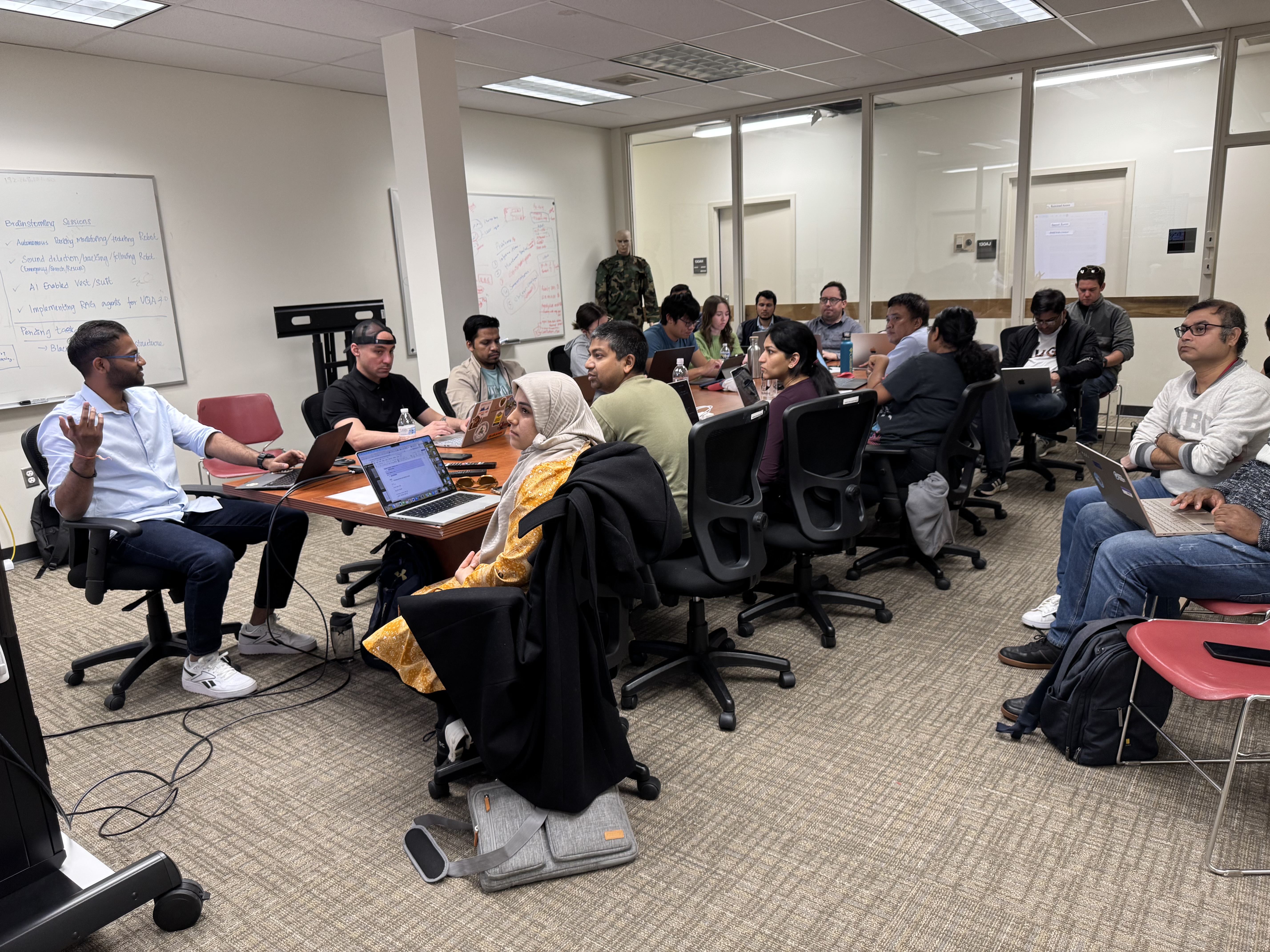
A large group of students and professionals sit around a long conference table in a collaborative workshop setting.

Mission

iHARP conducts data-intensive research, education, outreach, and cyberinfrastructure development that will transform understanding of the effects of climate change in polar regions. This institute brings together stakeholders and leading scholars in data science and polar science to reduce uncertainties in projecting Greenland and Antarctica’s future mass balance, associated sea-level rise, and impacts on global communities.
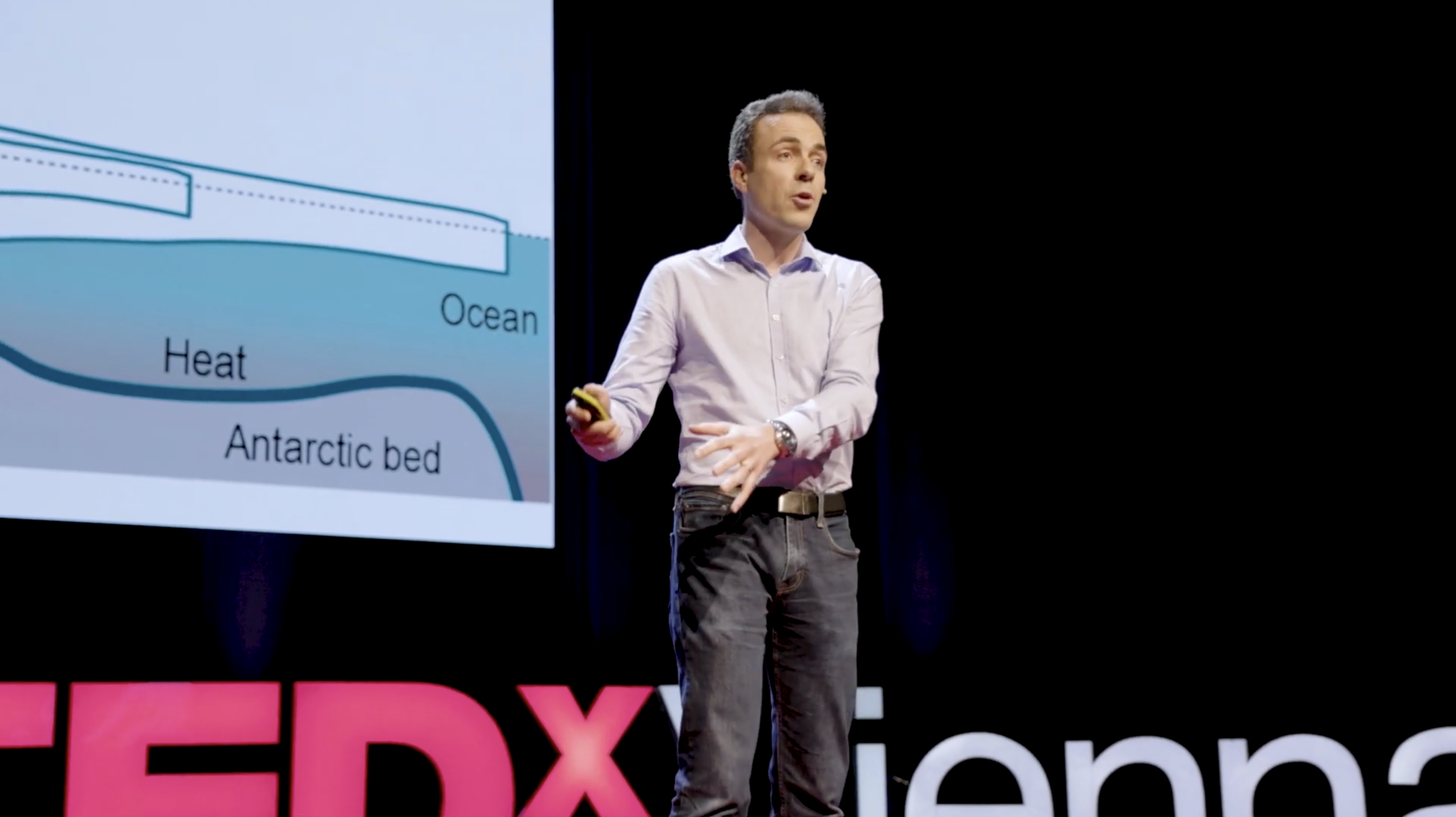
A man in a purple shirt speaks on a dark stage with a TEDxVienna logo. Behind him, a screen shows a diagram of the ocean and the Antarctic bed.
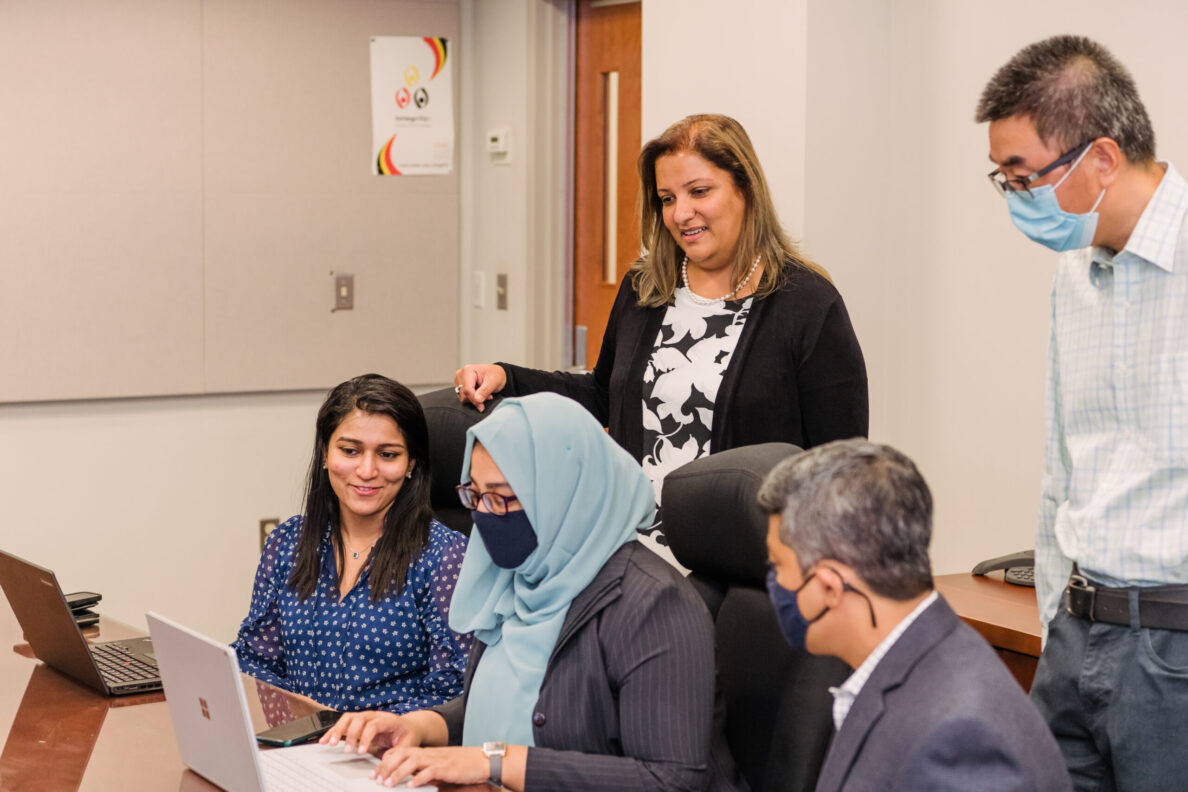
A group of five researchers gathers around a desk and two laptops in an office setting.
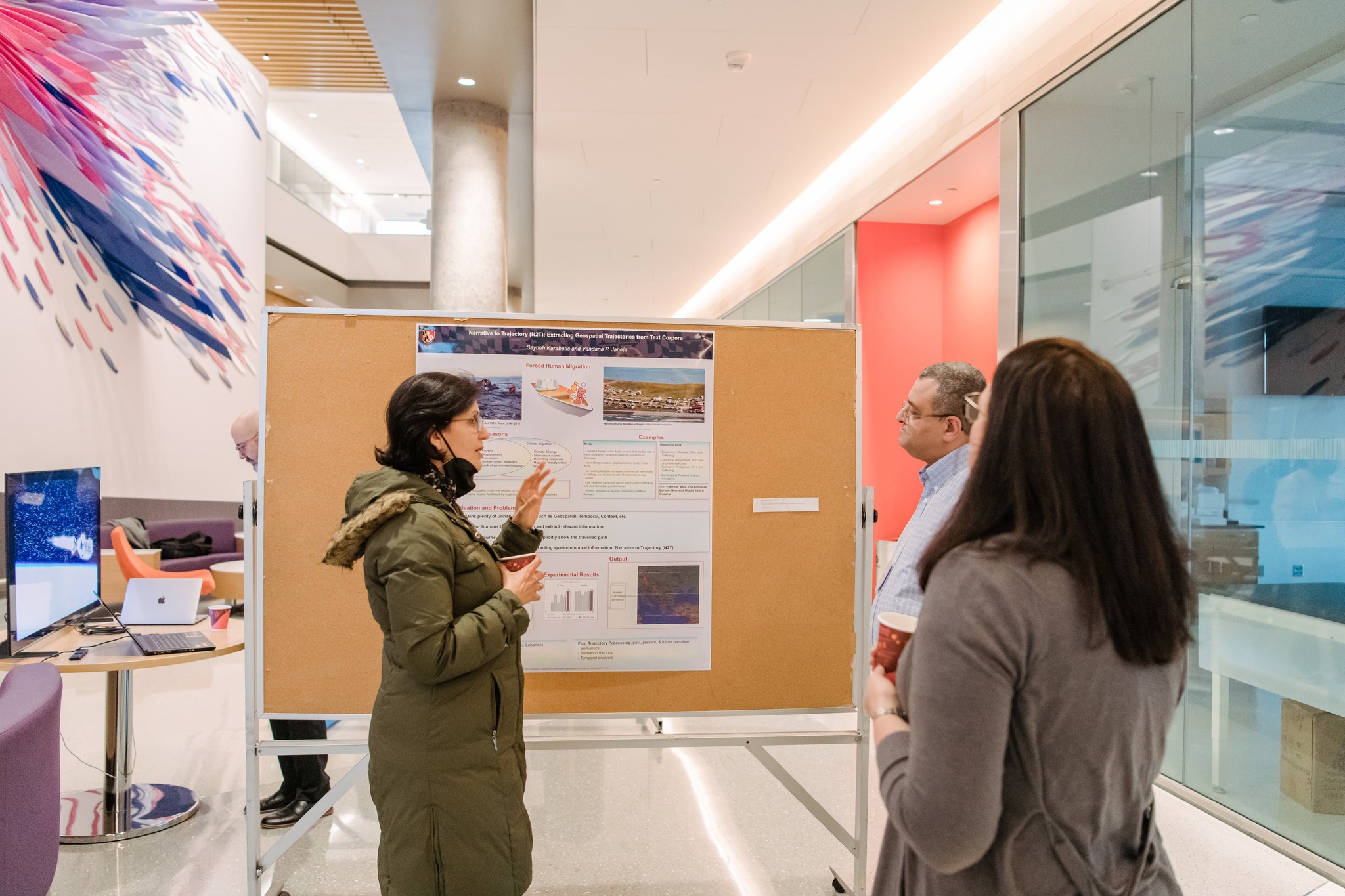
A woman in a green coat presents a scientific poster to two colleagues in a bright hall. A colorful blue and pink mural is on the wall behind them.

Vision

iHARP advances our understanding of the response of polar regions to climate change and its global impacts by deeply integrating data science and polar science to spur physics-informed, data-driven discoveries.

Areas of work

A dark and light blue line icon of a large iceberg with jagged peaks. A smaller piece of ice is visible in the center.

Polar Science

A dark and light blue line icon of Earth next to a sun and a thermometer. A dashed line circles the planet, with small clouds at the bottom.

AI Ready Climate Science

A dark and light blue line icon of a human brain. A square computer chip is placed over the center of the brain.

Physics Driven Machine Learning

A dark and light blue line icon of a globe with a quarter cut away shows the inside layers of the Earth with lines pointing to the core.

Geospatial AI

Principal Investigators

View full team External link icon
Headshot of Vandana Janeja, a woman with brown hair and a smile, wearing a black and teal geometric patterned blouse.

Vandana Janeja

Principal Investigator
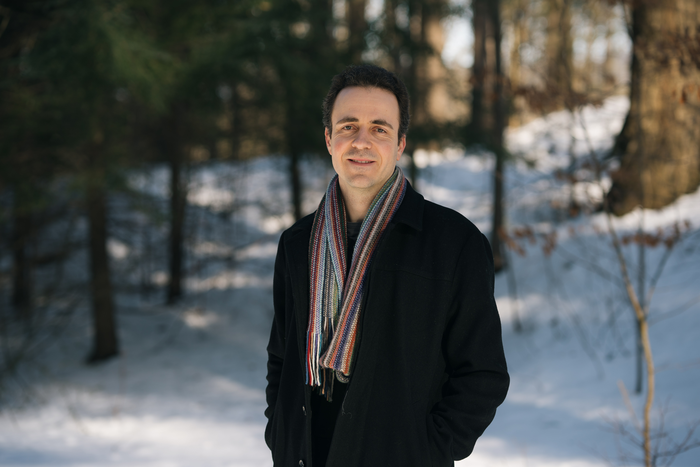
Headshot of Mathieu Morlighem, a man in a black coat and colorful striped scarf, standing in a snowy wooded landscape.

Mathieu Morlighem

Co-PI

Headshot of Shashi Shekhar, a smiling man with glasses and grey hair, wearing a blue collared shirt and charcoal grey blazer.

Shashi Shekhar

Co-PI

Headshot of Jianwu Wang, a smiling man with glasses and short dark hair, wearing a white button-down shirt against greenery.

Jianwu Wang

Co-PI

Headshot of Aneesh Subramanian, a smiling man with salt-and-pepper hair, wearing a navy blazer and light blue shirt with mountains behind him.

Aneesh Subramanian

Co-PI

Publications

Explore in new tab

Stay Connected