About the NSF HDR Ecosystem

The National Science Foundation (NSF) Harnessing the Data Revolution (HDR) Institutes are an integrated fabric of interrelated institutes that aim to accelerate discovery and innovation in multiple areas of data-intensive science and engineering.

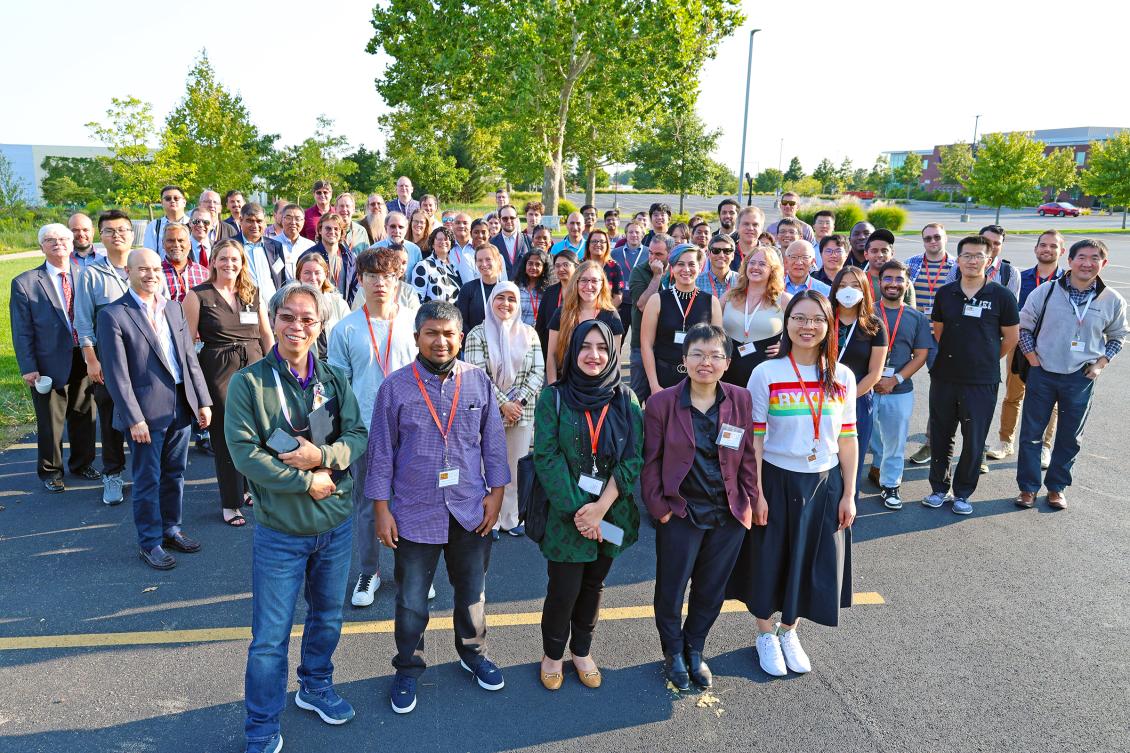
A large group of people stands outside on a paved area for a photo. They are wearing lanyards and smiling under a clear sky with green trees.

The Harnessing the Data Revolution (HDR) Ecosystem is a collection of National Science Foundation (NSF) funded institutes advancing data driven science to accelerate innovation in a broad array of research domains. The institutes include Accelerated AI Algorithms for Data-Driven Discovery (A3D3), the Imageomics Institute, the Institute for Data-Driven Dynamical Design (ID4), the Institute for Geospatial Understanding through an Integrative Discovery Environment (I-GUIDE), and the Institute for Harnessing Data and Model Revolution in the Polar Regions (iHARP). The ecosystem emphasizes a convergent, interdisciplinary approach, bridging expertise to tackle complex challenges in areas such as climate science, biology, astrophysics, materials science, and more. It supports open science, through the collaborative development of open-source tools, workflows, and resources.

By integrating machine learning, which allows large-scale simulation and modeling, the ecosystem develops new ways to analyze complex data, reveal hidden patterns, and generate actionable scientific insights. HDR trains the next generation of scientists through educational programs, research-integrated training, and community-driven learning experiences to prepare a diverse workforce for emerging data-intensive challenges. Together, the HDR Ecosystem drives research, expands understanding across diverse fields, and advances scientific innovation for societal benefit.
Massachusetts Minnesota Montana North Dakota Hawaii Idaho Arizona California Nevada New Mexico Oregon Utah Wyoming Arkansas Iowa Kansas Missouri Nebraska Oklahoma South Dakota Louisiana Texas Connecticut New Hampshire Rhode Island Vermont Alabama Florida Georgia Mississippi South Carolina Indiana Kentucky North Carolina Tennessee Virginia Wisconsin West Virginia Delaware District of Columbia New Jersey New York Pennsylvania Maine Michigan Alaska West Virginia Delaware District of Columbia New Jersey New York Pennsylvania Maine Michigan Alaska

History

In 2016, NSF unveiled a set of "Big Ideas," 10 bold, long-term research and process ideas that identify areas for future investment at the frontiers of science and engineering. The Big Ideas represented unique opportunities to position the United States at the cutting edge of global science and engineering by bringing together diverse disciplinary perspectives to support convergent research. One of these big ideas was “Harnessing the Data Revolution”, focusing on enabling new modes of data-driven discovery.

In 2019, NSF launched Institutes for Data-Intensive Research in Science and Engineering (I‑DIRSE) Idea Labs and Frameworks, Transdisciplinary Research in Principles of Data Science (TRIPODS), and Data Science Corps (DSC), whose combined portfolio of awards formed the eventual solicitation of full-scale HDR Institutes. In October 2020, NSF released the program solicitation for the establishment of the HDR ecosystem. NSF planned to fund four to seven such institutes over five years, with a total anticipated program budget of approximately $70 million. In September 2021, the five HDR Institutes were introduced. The institutes now operate as hubs for research, education, and collaboration, driving data-driven innovation across multiple scientific domains and working to address critical national challenges.